What Holds The Glow
Solo Exhibition:-
Kaiyi Wong (unrealitykai)
18th January – 28th February 2026
Core Design Gallery, Subang Jaya
*Click on images to zoom in


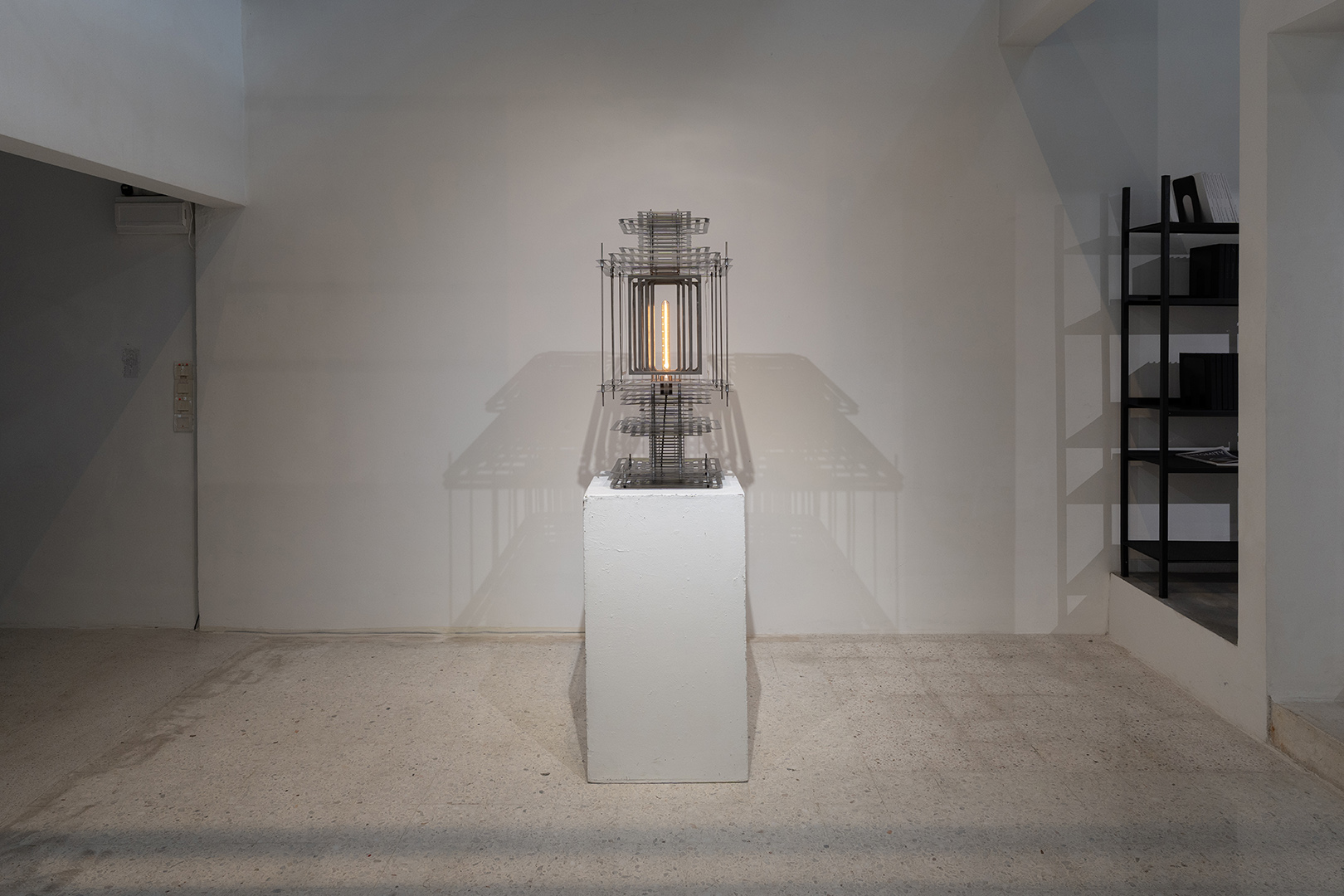


The Architecture of Contemplation: A Southeast Asian Position in Light and Space
This exhibition proposes that some of the most significant dialogues in contemporary art occur not through the replication of symbols, but through the translation of structural intelligence. In “What Holds the Glow”, Malaysian Chinese spatial artist Kaiyi Wong (unrealitykai) enters a global conversation shaped by artists such as James Turrell, Lee Ufan, and Olafur Eliasson, whose practices treat light, space, and perception as constructed conditions rather than representational effects. Like Eliasson, whose architectural training informs his approach to spatial experience, Kaiyi understands sculpture as an environment to be built and inhabited rather than an object to be viewed.
Yet Kaiyi’s point of departure is distinct. His practice emerges from the condition of the Southeast Asian Chinese diaspora, where cultural inheritance often arrives not as a complete system, but as fragments of memory, logic, and spatial intuition. Trained as an architect at the University of Sheffield and shaped through a formative apprenticeship with artist Red Hong Yi, Kaiyi brings rigorous architectural thinking into contemporary sculpture. Working from his studio, “Unreality”, he does not replicate cultural symbols but undertakes a process of architectural archaeology and reconstruction.
He strips away the ceremonial surfaces of traditional Chinese spatial systems—such as the fortified communal logic of the Hakka “tulou (土楼)” and the interlocking intelligence of the “dougong (斗拱)” bracket —t o isolate their underlying principles: modularity, axial symmetry, layered thresholds, balance, and collective orientation. These principles are made manifest through stacked stainless-steel sheets fastened together with rods and nuts, requiring no welding, and through forms that gather viewers around a shared, illuminated core. In this way, inherited spatial logics are translated into a contemporary material language of steel and light.
This process is not nostalgic recovery but an active method of reconstruction. For Kaiyi, culture is not a stable inheritance but a system continually rebuilt through structure. His work asks not what has been preserved, but what logics endure beneath ornament—what can still be activated to shape how we gather, move, and orient ourselves in space. Identity, in this sense, is not performed but constructed.
At the center of the exhibition is the lantern, “Composure(静序)”reimagined not as a decorative or folkloric object but as a spatial instrument, transformed from object to architecture — a suspended framework of light that guides and holds memory. Light here is not an effect or embellishment; it is a structural material that defines volume, hierarchy, and internal coherence. Through light, structure becomes perceptible, and space becomes legible.
Installed alongside “Stillness(静观)” , “Axis(中轴)”, and “Equilibrium(平衡)”across wall, floor, ceiling, and pedestal, the four works form a unified spatial ecology rather than discrete objects. Their warm, restrained illumination produces an immersive field that subtly alters perception. Like the immersive environments of Turrell or the relational spatial propositions of Lee Ufan and Eliasson, Kaiyi’s installation operates through attentiveness rather than spectacle. The viewer is invited to slow down, to move with care, and to experience a gentle recalibration of body and awareness.
Yet this immersion is not purely phenomenological. It is grounded in a specific cultural logic. Drawing from Song dynasty ideals of restraint, balance, and inner cultivation, Kaiyi rejects excess in favor of contemplative infrastructure. His sculptures function as architectures of care: structures that do not impose meaning but support reflection. In this way, “What Holds the Glow” offers both an experiential refuge and a philosophical proposition.
Positioned within the global discourse of contemplative and architectonic installation, Kaiyi’s practice articulates a distinctly Southeast Asian contribution — one shaped by hybridity, migration, and reconstruction rather than lineage alone. He does not follow Turrell, Lee Ufan, or Eliasson, but meets them on shared philosophical ground, bringing with him a different inheritance: one built from fragments, discipline, and structural clarity.
Ultimately, “What Holds the Glow” proposes that culture does not endure through ornament or replication, but through the quiet persistence of organizing principles. In reconstructing these principles through light and form, Kaiyi offers a space not of spectacle but of orientation — a place where attention settles, balance returns, and structure itself becomes a form of care.
- Composure(静序)
Kaiyi Wong Composure (静序) Stainless Steel Sheet, Threaded Rods, Bulb Holder, Incandescent Bulb, Screws and Nuts 95cm (H) x 45cm (W) x 45cm (D) 2026
Stainless-Steel-Sheet-Threaded-Rods-Acrylic-Sheets-Bulb-Holder-Incandescent-Bulb-Screws-and-Nuts-95cm-x-45cm-x-45cm-2026-on.jpg)
2.jpg)
1.jpg)
3.jpg)
Stainless-Steel-Sheet-Threaded-Rods-Acrylic-Sheets-Bulb-Holder-Incandescent-Bulb-Screws-and-Nuts-95cm-x-45cm-x-45cm-2026-2.jpg)
- Equilibrium(平衡)
Kaiyi Wong Equilibrium(平衡)Stainless Steel Sheet, Threaded Rods, Bulb Holder, Incandescent Bulb, Screws and Nuts 82.5cm (H) x 41.5cm (W) x 48cm (D) 2026
Stainless-Steel-Sheet-Threaded-Rods-Acrylic-Sheets-Bulb-Holder-Incandescent-Bulb-Screws-and-Nuts-82.5cm-x-41.5cm-x-48cm-2026-2.jpg)
Stainless-Steel-Sheet-Threaded-Rods-Acrylic-Sheets-Bulb-Holder-Incandescent-Bulb-Screws-and-Nuts-82.5cm-x-41.5cm-x-48cm-2026-1.jpg)
2.jpg)
3.jpg)
1.jpg)
- Axis(中轴)
Kaiyi Wong Axis (中轴) Stainless Steel Sheet, Threaded Rods, Acrylic Sheets, Bulb Holder, Incandescent Bulb, Screws and Nuts 150cm (H) x 43cm (W) x 43cm (D) 2026
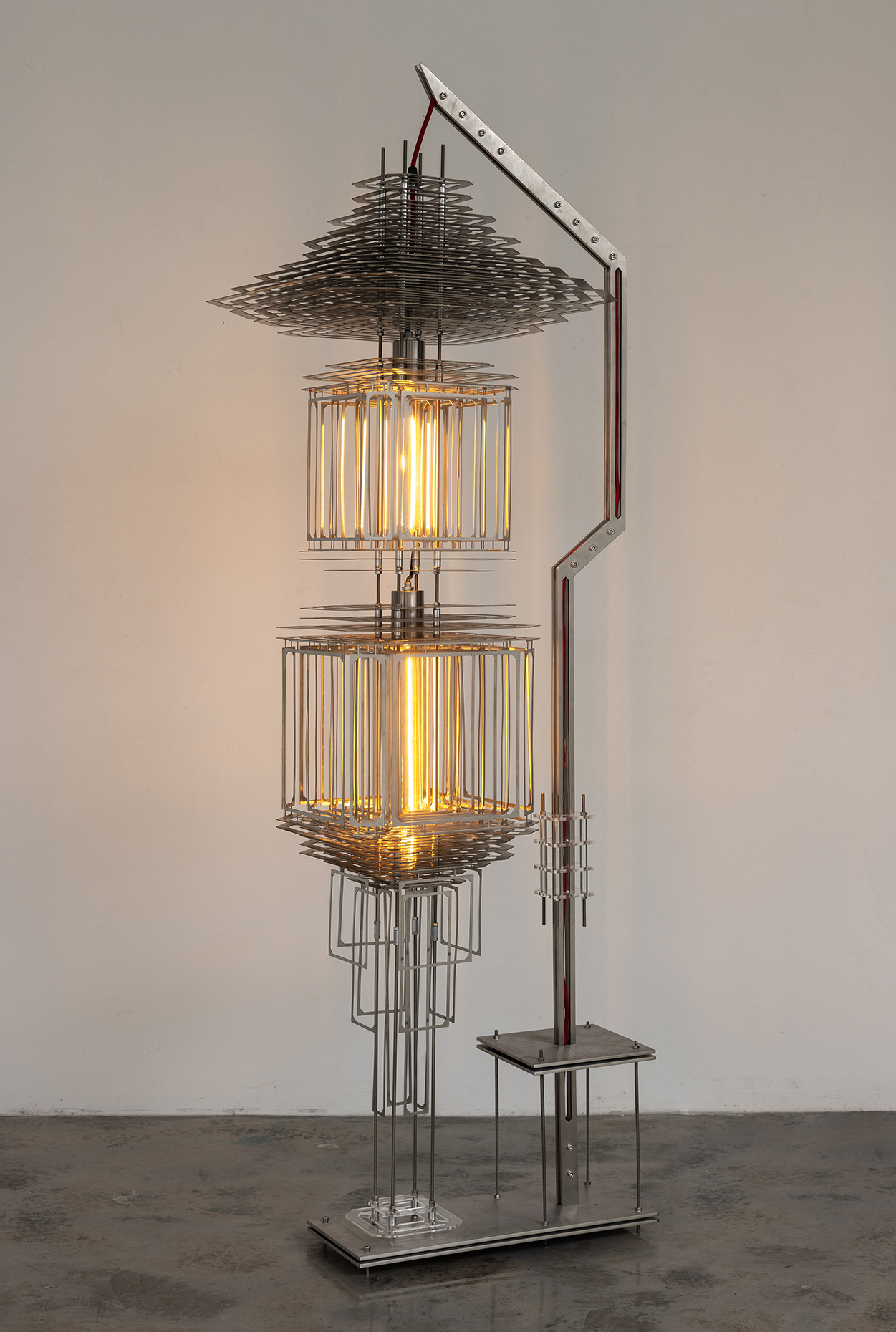
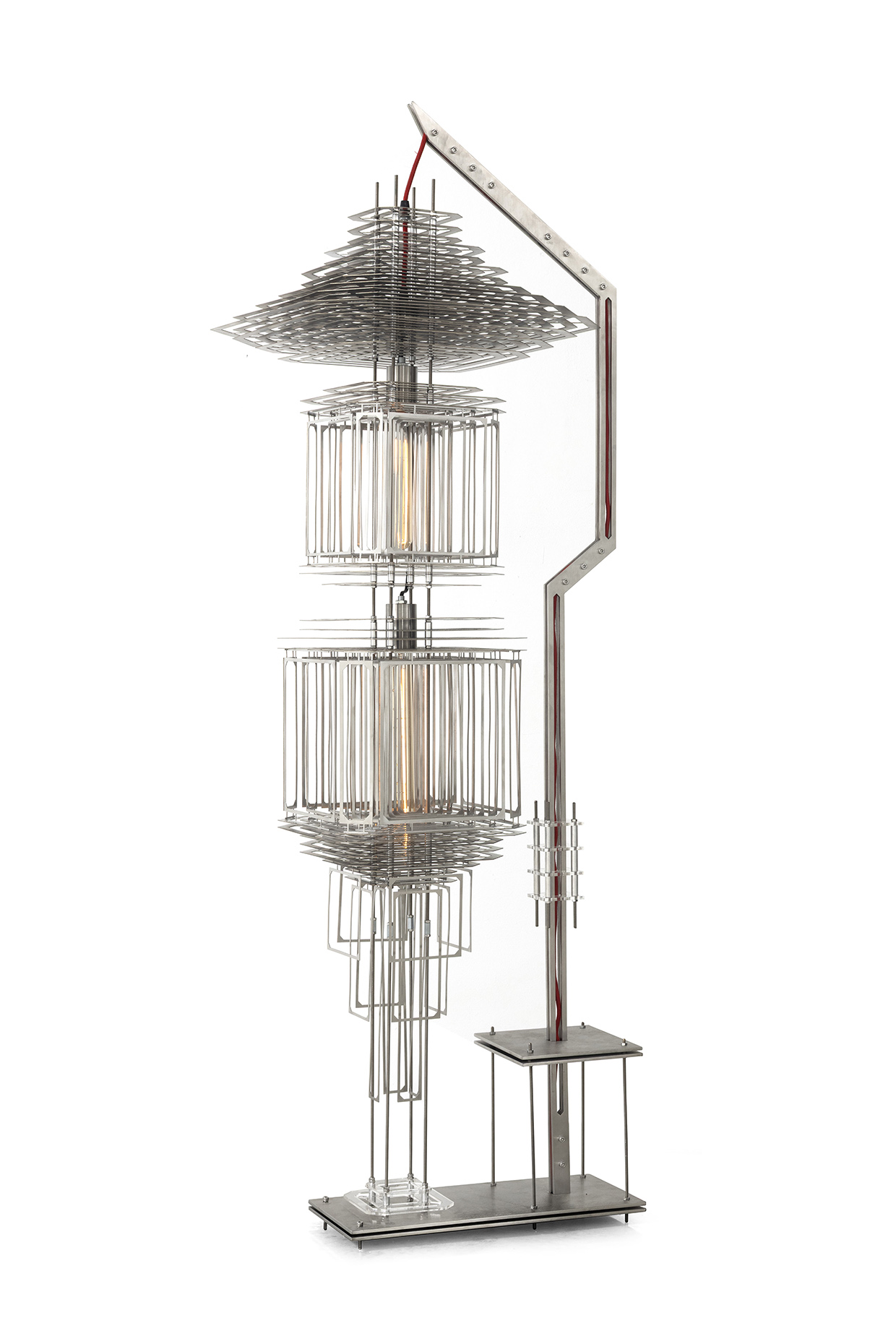
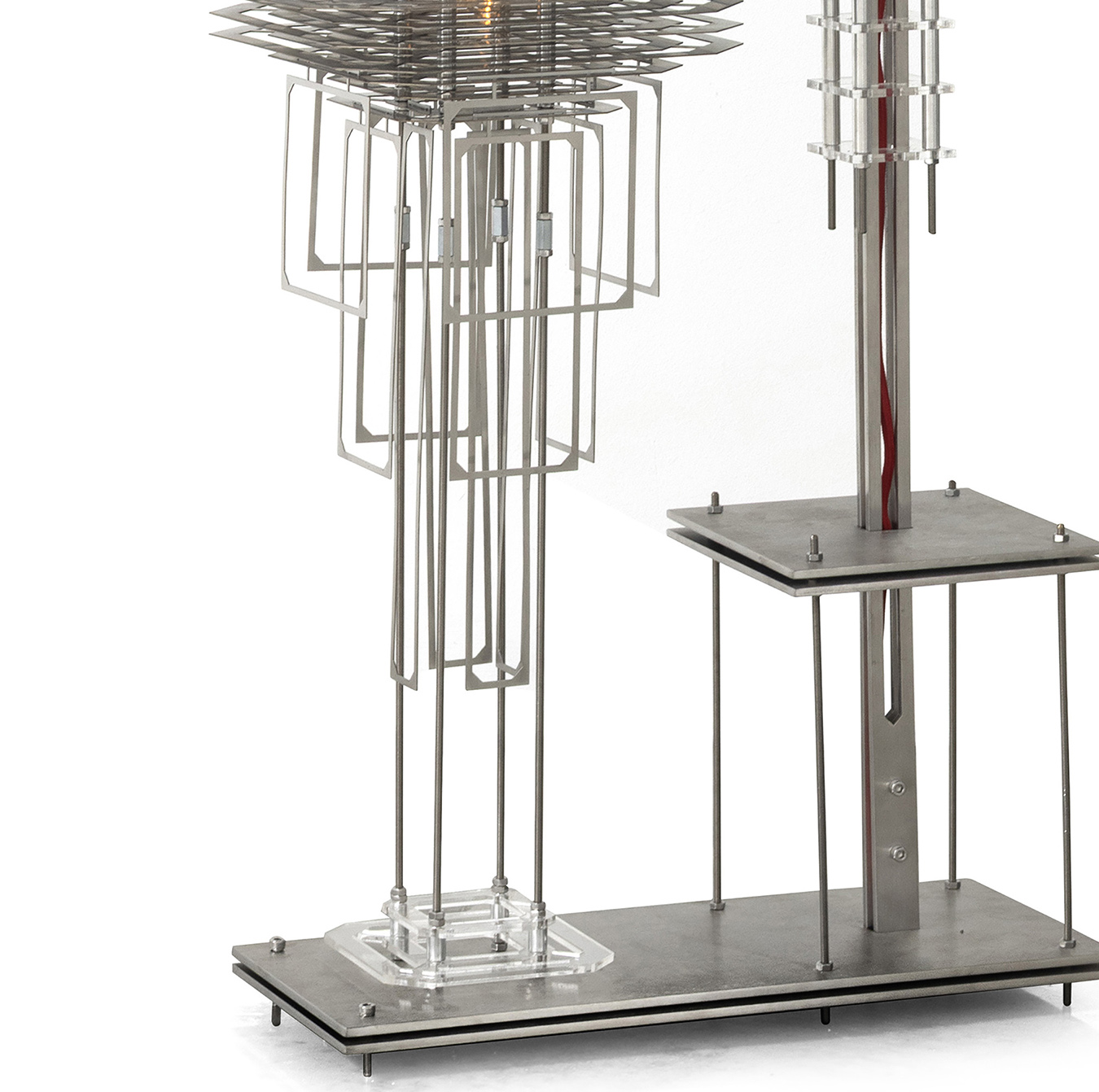


- Stillness(静观)
Kaiyi Wong Stillness(静观)Stainless Steel Sheet, Threaded Rods, Bulb Holder, Incandescent Bulb, Stainless Steel Mirror, Screws and Nuts 12cm (H) x 35cm (W) x 100cm (D) 2026
Stainless-Steel-Sheet-Threaded-Rods-Acrylic-Sheets-Bulb-Holder-Incandescent-Bulb-Stainless-Steel-Mirror-Screws-and-Nuts-100cm-x-35cm-x-12cm-2026-2.jpg)
Stainless-Steel-Sheet-Threaded-Rods-Acrylic-Sheets-Bulb-Holder-Incandescent-Bulb-Stainless-Steel-Mirror-Screws-and-Nuts-100cm-x-35cm-x-12cm-2026-1.jpg)
1.jpg)
3.jpg)
S2.jpg)